
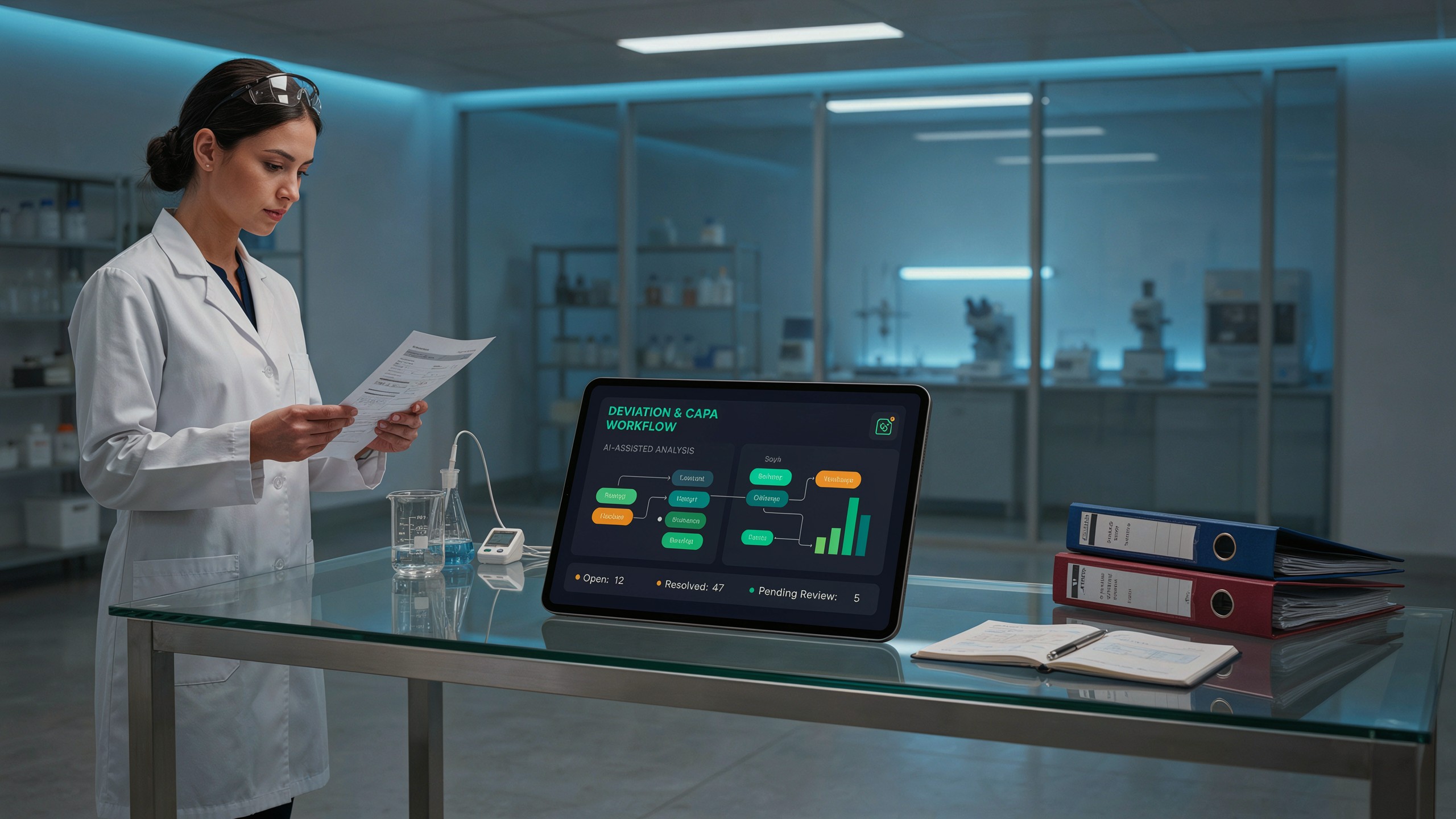
Deviation and CAPA processes are obvious candidates for AI. They contain large volumes of text, historical records, repeated investigations, recurring failure modes and significant administrative effort.
But the biggest opportunity is not using AI to write CAPAs faster.
It is using AI to help organisations learn from them better.
Consider what happens when a deviation is opened. Investigators may need to search previous deviations, equipment records, SOPs, batch information, complaints, maintenance history and earlier CAPAs. Much of this work involves finding, reading, comparing and summarising information.
AI is particularly suited to supporting these activities.
Imagine an investigation where the system automatically identifies similar historical deviations, highlights recurring equipment or process issues, retrieves relevant CAPAs, summarises previous root causes and identifies whether apparently unrelated events may share common characteristics.
The investigator starts with a richer evidence base.
AI could also help improve problem statements by identifying missing information or ambiguous language. It could support investigation planning by suggesting evidence sources that should be considered. It could identify patterns across hundreds or thousands of historical records that would be difficult for an individual investigator to recognise.
This moves CAPA from being primarily a record-management system towards becoming a learning system.
But there is an important distinction.
AI should support the investigation, not invent the root cause.
Correlation is not causation. A language model identifying that several deviations contain similar terminology does not prove they share the same failure mechanism.
Human investigators still need to understand the process, challenge assumptions, examine physical evidence and determine whether the proposed explanation is scientifically credible.
The real opportunity is therefore a partnership.
AI searches. Humans investigate.
AI identifies patterns. Humans determine causality.
AI drafts. Humans evaluate.
AI monitors. Humans remain accountable.
Used this way, AI could dramatically reduce the administrative burden surrounding deviations and CAPA while allowing Quality professionals to spend more time on what actually creates value: understanding why problems occurred and preventing them from happening again.
That is a far more meaningful application of AI than simply generating CAPA documents more quickly.