
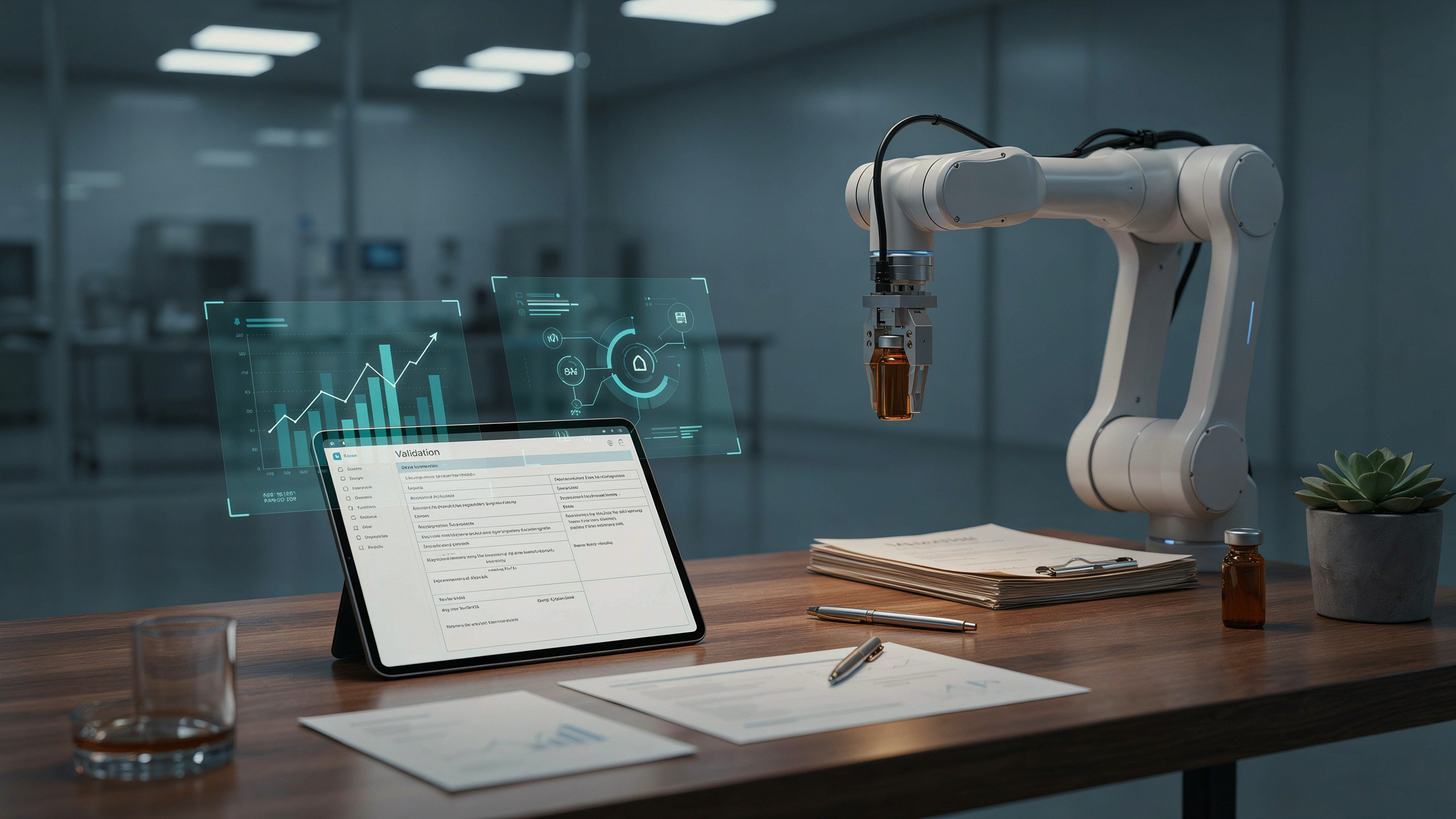
When people discuss AI in validation, the first opportunities usually involve documents.
AI can draft protocols, summarise requirements, generate test scripts, compare specifications and support report preparation.
These applications may save significant time.
But they may also represent the least interesting use of AI in validation.
The bigger opportunity is moving from document generation to process intelligence.
Validation has traditionally generated large quantities of documentation demonstrating that systems, equipment and processes are fit for intended use. But much of that information remains locked inside documents after approval.
What if validation information became more dynamic?
AI could potentially help analyse historical test results, identify recurring failure patterns, connect changes to affected requirements, identify areas where additional assurance may be required and support continuous understanding of validated state.
This direction is already visible in industry thinking. ISPE’s 2025 Digital Validation guide describes the move from paper-based validation towards digitally integrated frameworks supporting data integrity, operational efficiency and compliance. Its Validation 4.0 guidance goes further, describing a shift from static, upfront and localised validation controls toward a more dynamic, data-driven and continuous approach across the lifecycle.
That is a much more important transformation than simply generating protocols faster.
AI could help validation move from:
“Where is the evidence?”
towards:
“What does the evidence tell us about the current state of control?”
But validation also demonstrates the limitations of AI particularly clearly. Transparency, explainability, traceability and risk management remain fundamental. Current ISPE discussion of AI and the validated state specifically highlights these issues and cautions against inappropriate use of generative AI for active critical GMP decision processing.
The future of validation is therefore unlikely to be autonomous AI generating and approving its own evidence.
It is more likely to be digitally connected validation in which AI helps humans navigate evidence, detect patterns, focus testing and understand risk more intelligently.
The real transformation is not fewer validation documents.
It is a better understanding of the validated state.