
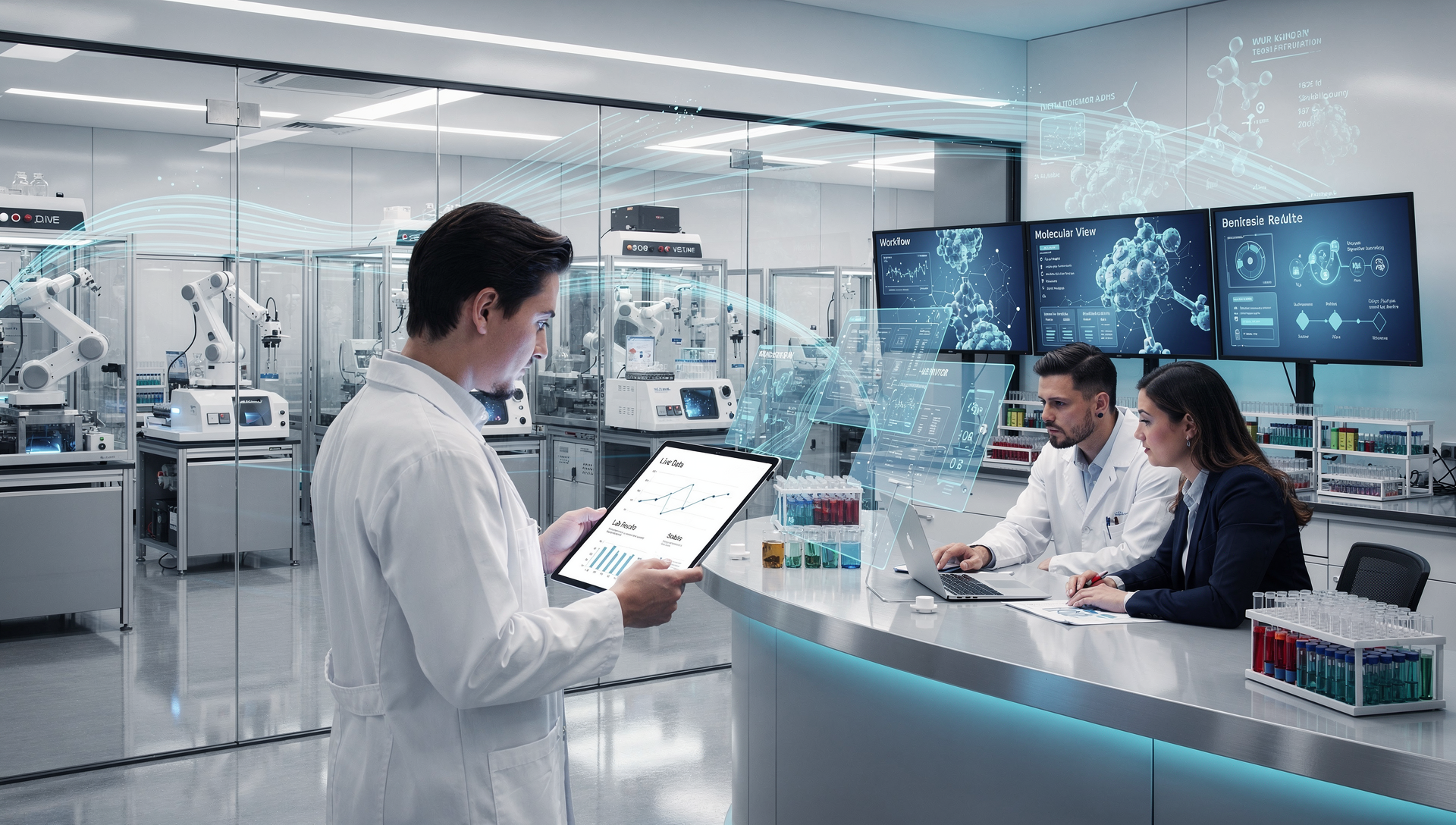
Digital transformation has become one of the most frequently used phrases in the life sciences sector. It appears in strategy documents, job descriptions, funding calls, regulatory discussions and technology roadmaps. Yet, in practice, digital transformation is often misunderstood. Too often, it is reduced to a conversation about systems, software, automation, artificial intelligence, dashboards or data platforms.
These technologies matter. They are changing how pharmaceutical, medical device, biotechnology and healthcare-related organisations operate. But technology alone does not transform an organisation. A new system does not automatically improve performance. A dashboard does not automatically improve decision-making. Automation does not automatically create efficiency. Artificial intelligence does not automatically solve poor process design.
True digital transformation in life sciences is not just about technology adoption. It is about redesigning how work is done, how people make decisions, how data flows through the organisation, how quality is assured, and how teams adapt to continuous change.
In other words, digital transformation is a process, people and performance challenge.
Beyond the Technology Conversation
The life sciences sector is highly regulated, quality-driven and process-dependent. Every change must be considered in the context of patient safety, product quality, data integrity, validation, compliance and operational control. This makes digital transformation different from many other sectors.
Introducing a new digital tool into a life sciences environment requires more than technical installation. It requires a clear understanding of existing processes, regulatory expectations, user requirements, data flows, risks, training needs and change impacts. This is why the sector increasingly needs professionals who can operate at the intersection of technology, quality, operations, process improvement and change management.
The ISPE Pharma 4.0™ model, for example, frames digitalisation not simply as the introduction of technology, but as a wider business transformation involving GxP-regulated processes, manufacturing, quality, engineering, logistics, regulatory affairs and supply chain activities.
That distinction is important. Digital transformation is not something that happens in the IT department alone. It affects operators, engineers, scientists, quality professionals, validation specialists, production managers, regulatory teams, supply chain staff and senior leaders.
Why Process Improvement Still Matters
One of the biggest mistakes organisations can make is to digitise a poor process.
If a process is unclear, inconsistent, duplicated, poorly controlled or badly understood, technology may simply make the problem faster, more visible or more expensive. Before implementing digital solutions, organisations need to understand the current state of work. They need to ask practical questions:
What problem are we trying to solve?
Where is the waste, delay, rework or variation?
What data is needed to make better decisions?
Who uses the process, and what do they need from it?
What risks exist from a quality, compliance or patient safety perspective?
How will the new system improve performance?
This is where Lean, Six Sigma, operational excellence and structured problem-solving remain highly relevant. Digital transformation does not replace process improvement. It increases the need for it.
In life sciences, digital transformation should be linked to measurable improvements such as reduced deviations, faster batch release, improved right-first-time performance, better data integrity, enhanced traceability, stronger compliance, improved productivity and more responsive decision-making.
The People Dimension
Digital transformation also changes roles, responsibilities and career pathways. As organisations introduce automation, advanced manufacturing systems, electronic batch records, manufacturing execution systems, laboratory information systems, data analytics, AI and digital quality tools, the skills required across the workforce are evolving.
The future life sciences professional will not necessarily need to be a software engineer. However, they will need to be digitally confident. They will need to understand how data is generated, managed, interpreted and used. They will need to work across functions, communicate with technical and non-technical teams, and contribute to change projects.
The Expert Group on Future Skills Needs has highlighted the importance of digital skills, data management, core manufacturing skills and transversal skills such as project management, technical writing and teamwork for the biopharma sector.
This is a critical point. The skills gap is not only technical. It is also transversal.
The Growing Importance of Transversal Skills
Transversal skills are the skills that cut across roles, functions and sectors. They include communication, collaboration, critical thinking, problem-solving, project coordination, leadership, adaptability, digital literacy and the ability to manage change.
In a digitally transforming life sciences environment, these skills are no longer “nice to have”. They are central to successful implementation.
A validation specialist may need to understand software assurance and data integrity.
A production supervisor may need to interpret dashboard data and lead process changes.
A quality professional may need to assess the impact of AI-enabled decision-support tools.
An engineer may need to work with IT, operations and QA to implement a new digital system.
A manager may need to lead teams through uncertainty, resistance and new ways of working.
The people who will thrive are those who can connect the technical, operational and human dimensions of transformation.
Change Management Is Not Optional
Many digital transformation initiatives fail not because the technology is poor, but because the change is poorly managed. Users are not engaged early enough. Processes are not redesigned properly. Training is too narrow. Benefits are not clearly communicated. The organisation underestimates the cultural impact of changing how people work.
In regulated environments, change management must be even more deliberate. It must consider compliance, validation, documentation, risk assessment, stakeholder engagement, training, communication and performance monitoring.
Successful digital transformation requires people who can ask not only “What technology are we implementing?” but also:
Why are we implementing it?
Who will be affected?
What process will change?
What behaviours need to change?
What risks need to be controlled?
How will we know if it has worked?
This is why programmes and professional development in this area must go beyond technology training. They must include process improvement, quality thinking, project management, change leadership, data literacy and business impact.
Implications for Careers
For individuals working in or seeking to enter the life sciences sector, digital transformation creates significant career opportunities. New and evolving roles are emerging in areas such as digital manufacturing, validation, quality systems, data analytics, process optimisation, automation, operational excellence, regulatory technology and digital quality.
However, the strongest career opportunities may not sit in purely technical roles. They may sit in hybrid roles: people who understand science and manufacturing, but can also work with data; people who understand quality and compliance, but can also support digital systems; people who understand operations, but can also lead improvement and change.
This is particularly important for graduates, career changers and experienced professionals who want to remain relevant as the sector evolves. The ability to combine domain knowledge with digital awareness and transversal skills will become a major differentiator.
What Programmes Need to Deliver
Education and training programmes in this space must reflect the reality of the sector. A programme on digital transformation in life sciences should not be designed as a narrow technology programme. It should help learners understand how digital tools are implemented in real operational and regulated environments.
That means covering areas such as:
Digital transformation strategy and implementation
Process improvement and operational excellence
Data management, analytics and visualisation
Quality, validation and regulatory considerations
Automation and smart manufacturing
Change management and project leadership
Transversal skills for cross-functional collaboration
Career readiness for emerging life sciences roles
The goal is not simply to teach people about technology. The goal is to prepare them to contribute to meaningful transformation.
From Adoption to Performance
The key message is simple: digital transformation in life sciences must move beyond technology adoption.
Adopting technology is only the beginning. The real value comes when technology improves processes, strengthens quality, enables better decisions, supports people in their roles and delivers measurable performance improvements.
For life sciences organisations, this means transformation must be designed around the realities of the sector: regulation, quality, safety, data integrity, validation and continuous improvement. For professionals, it means developing a broader skillset that combines digital confidence with process thinking, change capability and transversal skills.
The future of digital transformation in life sciences will not be defined by technology alone. It will be defined by people who can use technology to improve work, lead change and deliver better outcomes.
That is why the conversation must shift from systems and software to process, people and performance.