
For years, process improvement was associated with a familiar toolkit: process mapping, root cause analysis, Lean, Six Sigma, standard work, KPI boards, and continuous improvement workshops. Those skills still matter. But they are no longer enough.
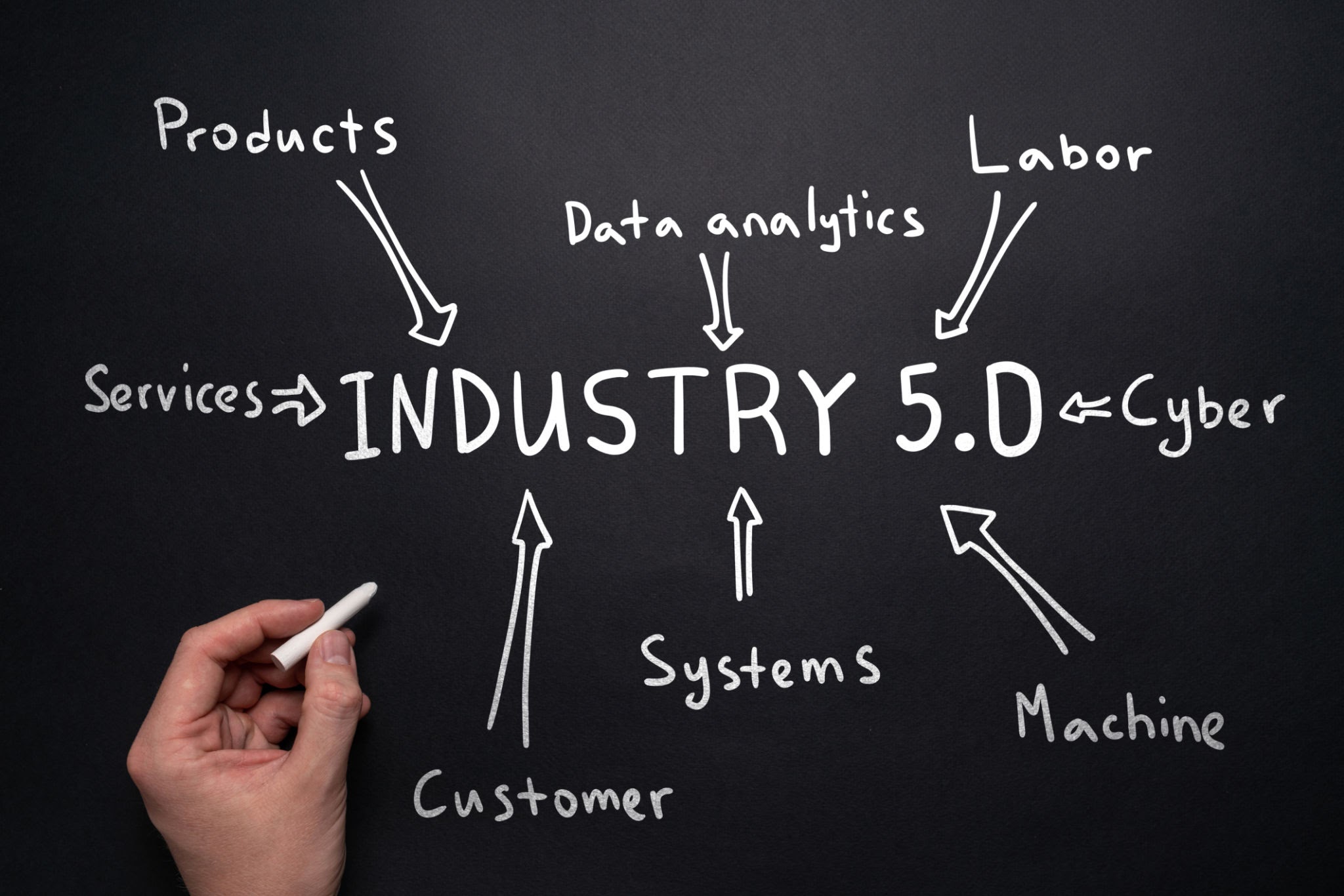
Industry 5.0 is changing the context in which process improvement happens. The concept, as framed by the European Commission, moves beyond a narrow focus on efficiency and automation and places greater emphasis on three ideas: human-centricity, sustainability, and resilience. In other words, improvement is no longer just about making a process faster or cheaper. It is about designing systems that perform well, adapt well, and work well for people.
That shift has major implications for the people leading process improvement. The process improver of the past could often succeed by being strong in methods. The process improver of Industry 5.0 must combine methods with digital fluency, systems thinking, people leadership, and ethical judgement.
From efficiency expert to systems improver
In many organisations, process improvement historically focused on local optimisation. Reduce waste. Improve yield. Cut variation. Shorten cycle time. These are still valid goals, but Industry 5.0 requires a broader lens.
A change that improves one metric may worsen another. A highly automated process may reduce labour hours but create new fragility if skills, data quality, cybersecurity, or system integration are weak. A process that looks efficient on a dashboard may still create frustration for operators, quality risks for patients, or unnecessary environmental burden. Industry 5.0 asks organisations to think in terms of total system performance rather than isolated efficiencies.
This means the new process improvement professional must be able to ask better questions:
- Is the process efficient?
- Is it resilient?
- Is it sustainable?
- Is it usable by real people?
- Does it improve decision-making?
- Does it reduce risk as well as waste?
That is a different skill profile.
1. Digital and data literacy
The first new skill is not coding. It is digital and data literacy.
Process improvement professionals now work in environments shaped by MES, eBR, historians, dashboards, workflow tools, AI-enabled analytics, sensors, and integrated planning systems. To improve a process, they must understand how digital systems represent reality, where data comes from, how reliable it is, and where it can mislead. McKinsey notes that technology investments often fail to deliver value without corresponding workforce capability, especially at frontline level.
In practice, digital and data literacy means being able to:
- read process data critically rather than passively
- distinguish signal from noise
- understand basic automation and system workflows
- challenge poor dashboard design or bad metrics
- work with digital teams without becoming dependent on them
- identify when a process is being digitised without actually being improved
The new process improver does not need to be a software engineer, but they do need to be comfortable working in data-rich environments. They must understand that digital transformation and process improvement are now inseparable.
2. Systems thinking
Industry 5.0 environments are more connected, more dynamic, and more interdependent. That makes systems thinking essential.
A process change can affect quality, compliance, maintenance, training, scheduling, inventory, energy use, customer service, and employee workload all at once. Traditional improvement efforts often fail because they solve the visible problem while ignoring the surrounding system.
Systems thinking means seeing relationships, feedback loops, delays, constraints, and unintended consequences. It means understanding that process performance is often shaped by upstream design choices, management behaviours, and cross-functional handoffs rather than by the final step where the failure becomes visible.
This is especially important in regulated sectors such as pharma and medical devices, where process changes can have implications for validation, documentation, quality systems, and patient safety. The new improver must be able to connect operational, technical, and governance perspectives rather than treat them as separate worlds.
3. Human-centred improvement
One of the clearest messages in Industry 5.0 is that people move back to the centre. The European Commission explicitly describes Industry 5.0 as human-centric and focused on the wellbeing of the worker, not just the output of the system.
This means process improvement can no longer be treated as a purely technical exercise. A theoretically perfect process is not truly improved if it is confusing, exhausting, or impossible for people to use consistently.
Human-centred improvement requires skills in:
- observing real work, not just documented work
- listening to operators and frontline teams
- understanding cognitive load and human factors
- designing practical workflows, not idealised ones
- balancing standardisation with usability
- improving adoption, not just design
Many failed improvement projects are not failures of logic. They are failures of empathy. The process looked good in PowerPoint, but it did not fit how work actually happens. Industry 5.0 raises the importance of this issue considerably.
4. Change leadership and influence
In the past, process improvement specialists could sometimes operate as technical problem-solvers on the edge of the business. That is much harder now.
Improvement increasingly involves changes to technology, roles, data flows, governance, and skills. These changes create uncertainty. People worry about job redesign, performance expectations, new systems, and the loss of familiar routines. Without strong change leadership, even good ideas stall.
The World Economic Forum’s Future of Jobs Report 2025 highlights that 39% of workers’ core skills are expected to change by 2030, reflecting ongoing disruption in how work is done.
That means process improvement professionals need stronger capabilities in:
- stakeholder engagement
- communication
- facilitation
- conflict management
- coaching
- cross-functional collaboration
- building trust during change
The new improver must be able to influence without always having formal authority. They must translate between engineers, operators, quality teams, IT specialists, and leadership. Technical competence remains important, but social competence is now equally critical.
5. Resilience thinking
Industry 4.0 often focused heavily on smartness, speed, and connectivity. Industry 5.0 adds a stronger emphasis on resilience. That matters because many organisations have learned the hard way that efficient systems are not always robust systems.
A process can be lean but brittle. It can be highly automated but difficult to recover when systems fail. It can be tightly optimised for normal conditions but weak under disruption.
Resilience thinking means designing and improving processes that can absorb variation, recover from disruption, and continue to perform under stress. It includes:
- scenario thinking
- risk awareness
- contingency design
- business continuity thinking
- understanding single points of failure
- designing for recoverability, not just peak performance
This is an important mindset shift. The goal is no longer simply the best-case process. It is the best process for a real world that is volatile, digital, and interconnected.
6. Sustainability awareness
Industry 5.0 also links industrial performance to environmental and societal goals. That means process improvement must increasingly account for sustainability, not as a public-relations add-on, but as part of operational design. The European Commission explicitly positions sustainability as one of the core pillars of Industry 5.0.
For process improvement professionals, this expands the idea of waste. Waste is no longer limited to time, defects, overprocessing, or inventory. It also includes energy inefficiency, material loss, avoidable emissions, and poor resource utilisation.
The new improver should understand:
- how process design affects resource use
- how to identify environmental waste in operations
- how sustainability metrics connect to operational decisions
- how to balance productivity with responsible production
This does not replace Lean thinking. It deepens it.
7. AI fluency and critical judgement
Artificial intelligence is beginning to influence how organisations analyse processes, detect patterns, predict failures, support investigations, and generate reports. This creates opportunity, but also risk.
The World Economic Forum identifies AI and big data among the fastest-growing skill areas, while McKinsey highlights growing demand for AI fluency and stronger worker capability to capture value from AI-enabled systems.
For process improvement professionals, AI fluency does not mean blindly trusting machine-generated insight. It means knowing:
- where AI can help
- where AI can distort
- when data quality is too weak
- when correlation is being mistaken for causation
- when human judgement must override algorithmic confidence
This is where critical thinking becomes central. The new improver must be able to challenge outputs, test assumptions, and avoid automating poor thinking. In Industry 5.0, human judgement becomes more important, not less.
8. Cross-disciplinary collaboration
The best process improvement professionals increasingly operate at the intersection of operations, quality, digital, engineering, and people management. They are translators.
They can speak to frontline staff about practical workflow problems. They can speak to leadership about business impact. They can speak to IT about data structures and systems constraints. They can speak to quality and compliance teams about risk, control, and evidence.
This cross-disciplinary capability matters because many transformation failures come from fragmentation. One team owns the technology. Another owns the process. Another owns training. Another owns quality. Nobody owns the system as a whole.
The new skill, therefore, is integration. Not just technical integration, but organisational integration.
9. Continuous learning
Perhaps the biggest skill of all is the ability to keep learning.
The process improvement body of knowledge is expanding. Traditional CI methods are now intersecting with automation, analytics, AI, sustainability, resilience, and human-centred design. No individual will master all of it once and for all.
The professionals who will thrive are those who remain curious, adaptable, and willing to update their methods. The Future of Jobs Report 2025 points to continuous upskilling and reskilling as a key response to changing skill requirements across industries.
That means the new mindset is not “I know Lean” or “I know Six Sigma.” It is “I know how to improve, learn, adapt, and integrate.”
What this means for organisations
The challenge is not only individual. Organisations also need to rethink how they develop process improvement capability.
If a company still defines its improvement talent only in terms of classic Lean tools, it is underestimating what modern operations require. Training and development now need to include:
- digital confidence
- data interpretation
- human factors
- change leadership
- resilience and risk thinking
- sustainability awareness
- AI literacy
- cross-functional communication
In short, organisations need fewer isolated tool experts and more rounded improvement leaders.
Conclusion
Process improvement is not becoming obsolete in Industry 5.0. It is becoming more important. But it is also becoming broader, more human, and more strategic.
The old model of the improver as a technical efficiency specialist is no longer enough. The new model is someone who can improve processes in ways that are digitally aware, human-centred, resilient, sustainable, and grounded in critical thinking.
That is the real shift in Industry 5.0. The future of process improvement will not belong to those who only know the tools. It will belong to those who can connect technology, people, process, and purpose into one coherent improvement approach